
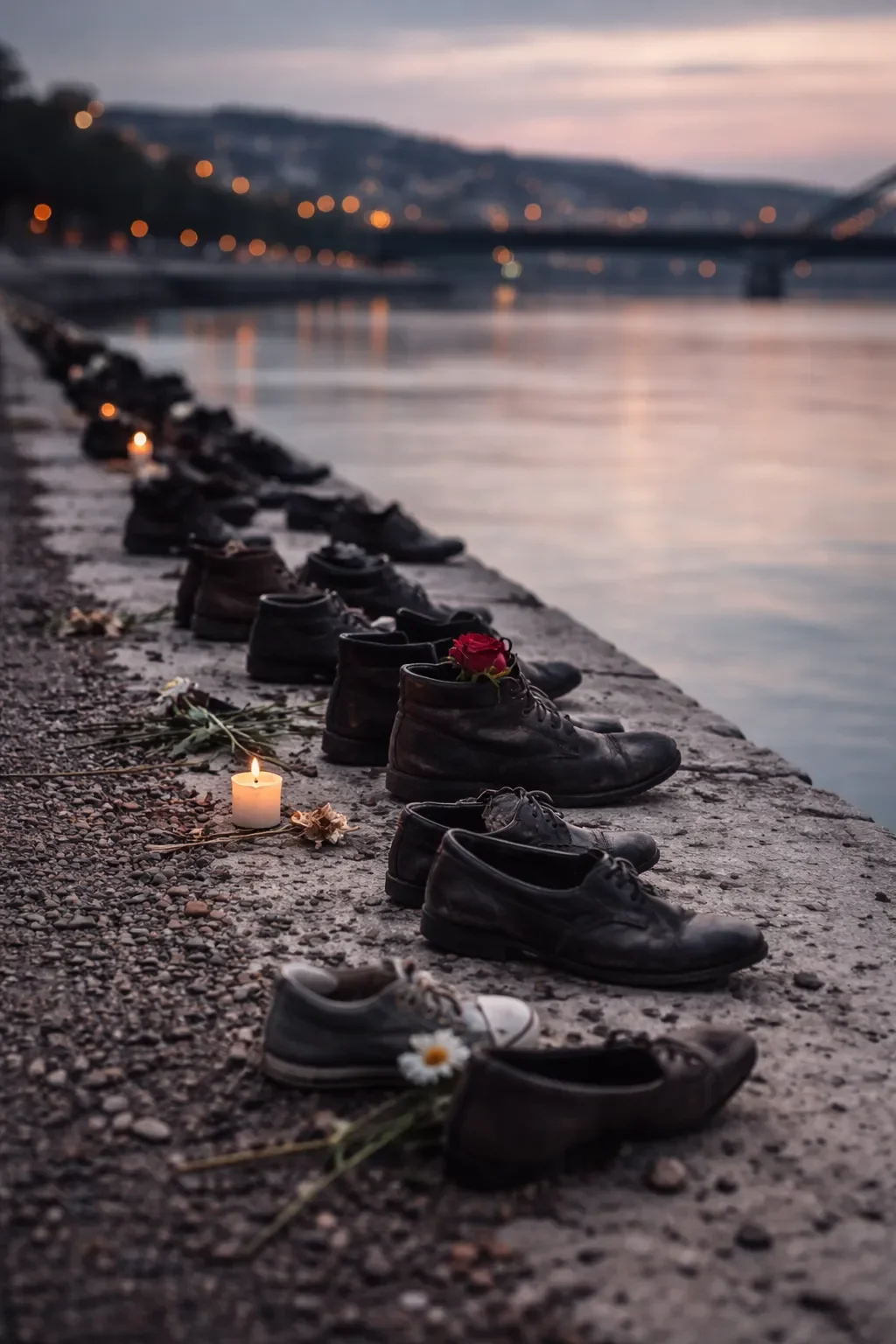
Source Water
Part I — Source Water
We were told this country was a river. Freedom flowing from mountains of intention toward oceans of possibility. We were told the current was natural, inevitable, self-renewing.
But rivers do not flow by themselves. They flow because something upstream pushes them. They flow because something upstream refuses to stop.
And we are upstream.
I think of water when I think of this nation. The way it remembers every hand that touched it. The way it carries silt and bone and prayer and history. The way it forgives nothing and forgets nothing. The way it moves forward regardless of whether anyone understands what they have poured into it.
You can poison a river quietly. You can bless it in silence. Either way, the children downstream will drink what you leave them..
We pretend politics is downstream. We pretend presidents and congresses and courts determine the direction. They do not.
They drink what we pour. They swim in what we normalize. They govern the sediment we deposit through language, through silence, through what we choose to pretend is normal.
The river flows from us.
I have been thinking about two people. Renee Goode. Alex Pretti.
Not as headlines.
Not as evidence.
Not as an instrument of politics.
As human beings who walked into a day and did not walk out.
Renee Goode said, “That’s fine, dude. I’m not mad at you.” There is something unbearably American in that sentence. The belief that civility is protection. The belief that politeness is a barrier. The belief that saying I’m not mad might keep the world from becoming what it is about to become.
Alex Pretti knelt. Not in protest. Not in theater. Bent into that strange half-kneel where the body understands before the mind that something irreversible is about to happen. In that posture every soldier knows, the posture where time slows to a crawl and the future becomes uncertain and the present becomes unbearable.
They were not symbols until we made them symbols. They were not metaphors until power turned them into metaphors. They were not river until we poured them into it.
They were just people moving through a day.
Now they are water.
America has always been a water story. The pilgrims crossed water. The enslaved crossed water. The immigrants crossed water. The soldiers crossed water. The refugees crossed water.
We baptize. We flood. We dam. We drown.
We speak of tides of people. Waves of crime. Streams of misinformation.
We are a nation that understands power only as current.
And we forget that current begins somewhere.
I grew up believing this country was held together by institutions. Courts. Constitutions. Checks and balances. Documents on classroom walls.
Then I learned that paper does not restrain power. People restrain power.
And these people are tired.
Fatigue is the quietest tyrant. It does not wear a uniform. It comes in pajamas, ignoring another story, deciding that this one is too heavy, too complex, too likely to end in argument.
Fatigue tells you to let the river run.
But….The river flows from us.
There is a lie we tell ourselves about history. We imagine turning points as dramatic. Crowds. Speeches. Shots fired at dawn.
History is more often a couch and a phone and a quiet decision to remain silent.
History is a joke that succeeds because no one interrupts it. History is a tweet that goes viral because outrage is fun and correction is work. History is a conversation where someone says, “Well, they had it coming,” and nobody says, ‘No, they didn’t.’
The river flows from us.
We think cruelty requires cruelty. It does not. Cruelty requires apathy, repetition, and consent.
Consent is given in language. In memes. In metaphors. In the smallest of discriminations of who counts as a person.
When a president calls people vermin, he is not just insulting. He is teaching ears how to hear. When a governor calls a dead woman a terrorist, she is not just speaking. She is placing her in a category that does not require mourning. When a congressman says, “Well done,” to a murder, he is not just posting. He is blessing the current.
Cruelty is also whispered.
It is whispered when people who know better say, “Let’s wait for more information,” even when the information is on video. It is whispered when people who know better say, “This is complicated,” when complexity is being used to obscure clarity. It is whispered when people who know better say, “I don’t want to alienate anyone,” as if truth were a social faux pas.
The river flows from us.
We are upstream of language. We are upstream of memes. We are upstream of the words our children will learn to use before they learn to think.
Every phrase is a tributary. Every joke is a tributary. Every silence is a tributary.
We have poured sarcasm into the water and wondered why empathy died. We have poured tribalism into the water and wondered why compromise feels impossible. We have poured spectacle into the water and wondered why governance feels like theater.
The river flows from us.
I am not innocent here. None of us are.
I have laughed at things I should have stopped. I have shared things I should have interrogated. I have remained silent when silence was easier than conflict.
We like villains with capes and dictators with speeches. They make guilt understandable. The truth is much harder to digest. Most historical disasters are built by people doing normal things and deciding they are too tired to intervene.
The river flows from us.
There were men once who believed a man’s body could be a bridge. Men who believed their life was something that could be traded for a stranger’s future.
They died in surf, in jungles, in deserts, in cities whose pronunciation they could not know. They died for people who would never know who they were. They died believing that a future existed that justified the sacrifice.
We inherit their bones. We inherit their myths. We inherit their debt.
And what have we done with that inheritance?
We have turned courage into branding. We have turned sacrifice into decals. We have turned brotherhood into a hashtag.
The men who died for this country did not die so that killing could be applauded. They died so that killing would be restrained by law, by conscience, by trembling hands.
And yet here we are, applauding.
The river flows from us.
Christianity taught this country that every person is an icon of God.
Patriotism taught this country that every citizen is an icon of law.
We traded both for tribe.
We traded neighbor for narrative. We traded mercy for memes. We traded conscience for dopamine.
The river did not judge us. It bore what we poured.
I imagine Renee Goode’s children someday standing on a bank, asking what their mother’s death meant. I imagine Alex Pretti’s friends replaying the video, second by second, searching for the moment where history could have been changed.
I imagine a future child asking you what you did when people were killed and laughed about.
You will not be asked how you voted. You will be asked what you allowed to flow.
We are taught that history is downstream, that our influence is microscopic, that power is elsewhere. This is comforting.
This is also false.
Power is downstream of culture. Culture is downstream of speech. Speech is downstream of conscience.
The river flows from us.
There is a terror in realizing that the nation is not a machine but a system of storms, and you are part of the atmosphere. You are not a spectator. You are humidity. You are pressure. You are wind.
And when storms come, you will have helped make them.
We talk about democracy as if it were a thing. It is not a thing. It is a habit. A fragile, exhausting, daily habit.
It requires people who are willing to be awkward. Who are willing to say, That joke is wrong. Who are willing to say, That story is false. Who are willing to say, That death matters.
The river flows from us.
This is not a speech about politics. This is a speech about origin. About source water. About the quiet choices that become brutal currents.
Before the shot, there is a word. Before the policy, there is a meme. Before the regime, there is a joke.
We think tyranny arrives in a torrent. It does not. It seeps.
It seeps through language. It seeps through laughter. It seeps through fatigue. It seeps through silence.
And one day you wake up and the water tastes different, and you do not know when it changed.
The river flows from us.
I want you to feel that burden. Not as guilt. As the force that it is.
Because force is what keeps rivers from floating into the sky. Force is what makes consequences real.
We are force.
Part II — The Dead Speak Forward
There are voices in this country that never learned how to stop speaking. They speak through bones. Through monuments. Through soil that refuses to forget what it swallowed.
We built a nation on graves and then taught ourselves not to listen to them speak.
The river flows from us.
Imagine the dead standing in the current. As witnesses.
Men who never came home from the surf. Women who never came home from the march. Children who never came home from the fields. Immigrants who never came home from the crossing.
They stand in the river and look upstream.
They are not asking who you voted for. They are asking what you added.
I think of the men at Normandy. Not the speeches. Not the black-and-white film that makes it feel tidy.
I think of saltwater in lungs. Of sand between teeth. Of fear so thick it erased speech.
They stepped into a current they did not fully understand. They stepped forward because someone had to step forward.
They believed the future could be bought with their bodies.
They believed a man could become a bridge.
The river flows from us.
I think of Selma.
I think of feet on pavement. Of broken bones. Of tear gas blooming like poisonous flowers. Of a nation watching itself on television and deciding whether it would recognize what it saw.
Those marchers knew the river would not change unless they stepped into it. They knew silence was a dam. They knew speech was a flood.
The river flows from us.
I think of the unnamed. The factory workers whose lungs filled with dust. The farmworkers whose hands bled into soil that did not remember them. The railroad builders buried where they fell. The coal miners swallowed by hell.
They did not write speeches.
They became sediment.
And still, the river remembers them.
Renee Goode and Alex Pretti are not anomalies. They are tributaries joining an old current.
You can see the pattern if you stand far enough back. Power pushes. People resist. People kneel. People say they are not angry. People die.
Then the words comes to sand their identities smooth.
The river flows from us.
The dead are never silent. But they are terribly inconvenient.
They ask questions no administration wants to answer. They ask questions no party wants to bear. They ask questions that fracture the illusion that everything is under control.
So we drown them again with words.
Terrorist. Insurrectionist. Assassin. Collateral. Unfortunate. Necessary.
We build a second grave in language.
The river flows from us.
There is a line of American dead that stretches backward before the eye can see. You can trace it though if you know how to look.
You can trace it from the bodies in the Atlantic surf to the bodies in the Mississippi fields to the bodies under the freeway overpasses to the bodies on grainy body cam footage.
Different uniforms. Different excuses. Same current.
If the dead could speak, they would not argue policy. They would not debate tariffs or infrastructure or tax codes.
They would ask simpler questions.
Why were you so quiet? Why did you laugh? Why did you scroll past? Why did you think someone else would fix it?
The river flows from us.
I imagine a chorus.
A soldier with sand in unseeing eyes, We died so killing would not be easy.
A marcher with a fractured skull saying, We bled so law would be blind.
A farmworker with hands like bark saying, We labored so dignity would be more than a word.
A nurse on her knees saying, I believed the story. Why didn’t the story believe in me?
A woman in a car saying, I wasn’t mad at you.
They stand in the current and look upstream.
They look at you.
We like to believe history is progress. That the river moves inevitably toward justice. This is a myth we tell children and ourselves.
Rivers flood. Rivers dry up. Rivers are dammed. Rivers are poisoned.
Justice is not downstream. Justice is upstream work.
The river flows from us.
There is something obscene about how we sanitize the dead. We turn them into bullet points. Into curriculum. They are inspirational quotes on posters.
We erase the blood and the confusion and the normal day that preceded the obituary.
Renee Goode did not wake up planning to be history. Alex Pretti did not wake up planning to kneel in a national conversation.
They woke up as people. They became currents.
I keep returning to that kneeling.
Kneeling is a religious posture. A submissive posture. A pleading posture. A posture of prayer.
Alex Pretti knelt before the state.
Renee Goode spoke with the language of peace.
These are not threatening gestures. They are human gestures. They are the gestures of people who believe in rules, who believe in stories, who believe that civility matters.
And yet the river did not pause.
America is a nation that worships action movies and distrusts stillness. We are trained to see motion as threat. To see resistance as attack. To see presence as aggression.
A kneeling man is a suspect. A filming citizen is a target. A woman turning a steering wheel is a weapon.
We have turned fear into policy and policy into reflex.
The river flows from us.
The dead learn a brutal lesson we refuse. Systems do not need intent to kill. They need momentum.
Momentum is built by language, habit, doctrine, training, repetition, reward.
A system can kill while everyone inside it insists they are simply doing their job.
The river flows from us.
The soldiers at Normandy were trained to run forward. The marchers at Selma were trained to keep walking. The farmworkers were trained to keep bowing. The nurses are trained to keep caring.
Training is upstream.
We train each other with memes and talk radio and sermons and comments sections.
We train ourselves into cruelty.
Imagine if the dead could vote on your words. Imagine if they could annotate your timeline. Imagine if they could sit beside you while you scroll and ask,
Is this what we died for?
The river flows from us.
I do not want to make saints of the dead. The dead were human. They were wrong. They were petty. They were loving. They were tired.
And that, precisely, is what makes their deaths unbearable.
They were like you. And me
When you dehumanize the dead, you are dehumanizing the living. When you mock the kneeling, you practice for mocking the vulnerable. When you celebrate killing, you practice for tolerating more killing.
Practice is upstream.
There is a theology in the American river that predates Christianity. It was born far before the Constitution. It is ancient beyond any sermon.
It is the theology of conquest. Of manifest destiny. Of movement as morality.
We moved west. We moved bodies. We moved borders. We moved goalposts.
Movement became virtue.
And anyone who stood still was an obstacle.
In this theology, resistance is sin. Observation is interference. Kneeling is defiance. Peace is provocation.
The river flows from us.
The men who died for this country believed in a different theology. They believed in restraint. In discipline. In rules of engagement that mattered.
They believed power was sacred precisely because power could destroy.
They believed a nation worth dying for was one that made killing hard.
What have we done with that belief?
We have made killing easy. We have made killing viral. We have made killing content.
The river flows from us.
Christianity, too, bore a theology of reversal. The last shall be first. The meek shall inherit. Blessed are the peacemakers.
We have inverted it again. They celebrate the loudest. They crown the cruelest. And their platform the most incendiary.
The river flows from us.
I want you to imagine the dead standing shoulder to shoulder in the current. Not accusing. Not forgiving. Simply watching.
They see your posts. They hear your jokes. And most clearly, they hear your silence.
They do not care about your excuses.
If history is a river, then you are not a passenger on a ferry. You too are tributary.
You are the creek that joins the current. You are the rainfall that swells it. You are the drought that weakens it.
You are not small.
The river flows from us.
We have been taught to think of legacy as inheritance. Money. Property. Stories.
Legacy is water.
Your children will drink from what you pour. They will swim in what you believe. They will inherit what you dissolve into the stream.
The dead are upstream too. They are upstream in memory. In law. In precedent. In cautionary tale.
They pour warnings into the current.
We pour noise.
Renee Goode said she was not mad. That sentence deserves to be carved into stone.
It is a confession of faith in the story of civility. It is an act of grace in a moment that did not deserve grace. It is a reminder that humanity often meets power with gentleness.
Power rarely returns the favor.
Alex Pretti knelt. That kneel is a mirror held up to a nation that claims to value humility and restraint and law.
What does it mean when humility is met with bullets?
What does it mean when kneeling is met with applause?
The river flows from us.
The dead are upstream of your conscience. They ask what you are pouring.
Are you pouring contempt? Are you pouring cynicism? Are you pouring despair? Are you pouring humor as your anesthesia?
Or are you pouring resistance, clarity, love that refuses to be quiet?
We are a nation that loves origin stories. Pilgrims. Founders. Frontier.
The origin story never ends. Every generation is a source.
You are a source.
I want you to feel the force of that. Not as guilt. As awe.
You are water.
Part III — The Sediment of Silence
There is silence in a river, yet it is not empty.
It is the stillness after an identity is not spoken. It is the quiet after a trauma is witnessed and left alone. It is the thickness that settles when a question is met with turned faces, with eyes finding the ground.
The river flows from us.
There are stones on the bottom, sharp with what was swallowed, heavy with what was left unsaid. A father’s warning that never became a word. A mother’s grief that vanished. A brother who heard the door and let it close. A neighbor who saw and chose not to remember.
The river flows from us.
This is burial. Not in earth, yet in water, each omission dropping, each refusal sinking, each secret sifting down into the coldest of silt.
The river flows from us.
Generations stand on these beds. They plant crops and dig wells and drink from currents clouded by what their ancestors could not bear, would not speak.
The river flows from us.
Somewhere a child stands at the bank, searches the shallows for what glints, and finds only water thick with silt and old silence—the truth buried beneath layers, pushed down by the force of centuries.
The river flows from us.
There are no innocent hands at the water’s edge. Only those willing to wade in, to disturb the sediment, to bring up what others let rest.
The river flows from us.
There is a heaviness that cannot be washed away. Old lies made into stones, old identities lost among the pebbles, old prayers lost in the dark channel.
The river flows from us.
We inherit the silence of those who stood before us. We add to it with every unspoken word, every glance away, every breath held until the moment passes.
The river flows from us.
And what is buried is not lost. It directs the current, it claims the bottom, it waits for a season of flood, when the river will turn and reveal what no one wanted to remember.
The river flows from us.
Part IV — The Machinery of Current
There are men who build gates along the river. Stone driven into mud. Iron hammered into place. Water forced aside, channeled, narrowed. They inscribe their intentions into the bank. They leave scars that will never wash away.
The river flows from us.
Hands set wheels in motion. Hands lower iron bars. Hands close heavy doors. Laws fixed in the ground like stakes. Verdicts lowered like stones. Edicts written and left to harden.
The river flows from us.
Weapons lined along the bank. Steel raised, bodies ordered, uniforms arranged into lines. Badges, rifles, records, identities. Men stand watch, eyes forward. Some disappear into cells. More disappear into the current.
The river flows from us.
The machinery is built piece by piece. Every wall, every cage, every checkpoint, set in place by someone who chose where the river would turn, someone who chose who would pass and who would not.
The river flows from us.
Mechanisms grind behind locked doors. Cells fill, ledgers grow, bodies are counted and lost. The water thickens, slowed by all that is built to control it, gates, fences, checkpoints, rules.
The river flows from us.
Nothing here moves by accident. No gate rises un-commanded. No door locks itself. No order given without a voice behind it.
The river flows from us.
In the machinery there is no innocence. Only the force of what is built. Only the cost, the residue, the ceaseless movement of power through stone, wire, and flesh.
The river flows from us.
You can trace every drowned identity to a hand that pulled a lever. Every vanished voice to a signature on a line. Every broken body to the sound of a door closing.
The river flows from us.
What is built will be borne. What is borne will not be forgotten.
The river flows from us.
Part V — What Returns
There is a day when the river does not move. There is a day when the river breaks everything loose.
The river flows from us.
There are years when the water lies low, slow, choked by what we have buried. Men forget the bottom exists. Men pretend the surface is enough. Children drink and taste nothing beyond silt, and nobody remembers what clear water was.
The river flows from us.
There are days when nothing stirs. Old bones rest, old stones are still, old identities are quiet. No one remembers what was hidden. No one speaks the truth, and so nothing moves.
The river flows from us.
Then there is a day when the current breaks. A body rises. A stone rolls. Identities return, sharp and full of hunger.
The river flows from us.
The quiet does not last. Everything buried is waiting. What you refused to speak will find your voice. What you refused to see will find your door.
The river flows from us.
There are shouts. There is running. There is blood on the bank, blood in the water, blood remembered by the children who were never told the story.
The river flows from us.
No one is innocent in this flood. No one is untouched when the silence is broken. The past returns as a hand on the throat. The dead do not forgive. The water does not forget.
The river flows from us.
You can hide the bones only so long. You can pass the burden for a while. Yet when the river rises, when the identities come back, when the water surges, everything you buried is returned.
The river flows from us.
Some will say it is fate. Some will say it is nature. Some will say it is vengeance, justice, a reckoning.
The river does not care what you term it. It only bears what you gave it. It only returns what you tried to lose.
The river flows from us.
When the quiet ends, when the identities surface, when the river takes back what was hidden—remember who set it moving, remember who built the bottom, remember whose hands fed the water.
The river flows from us.
Part VI — The Return to Source
You have been taught to believe the river runs on its own. You have been told the current is destiny, that the direction is set. Yet there is no source beyond the hands that touch the water.
The river flows from us.
You want to blame the flood, blame the drought, blame the brutality that comes without warning, yet the warning has always been spoken. The warning is bone in the silt, the warning is identity in the stone, the warning is silence turned to acid in your own throat.
The river flows from us.
You stand at the bank and wait for something to change. You pray for rain or for mercy or for a power that is not yours. Yet the water in your hand is the water in the river. The voice you use is the current they will remember. The silence you keep is the silt they will inherit.
The river flows from us.
There are no watchers. There are only those who pour and those who drink, only those who choose and those who endure.
The river flows from us.
You will be asked what you poured. You will be asked what you buried, what you bore, what you released. You will be asked what you called normal. You will be asked who you stood beside and who you fed to the current.
The river flows from us.
There is no distance. There is only source. There is only the force in your own hands. There is only the memory you leave in the water.
The river flows from us.
You are the origin. You are the silt. You are the water and the trauma. You are the story borne forward. You are the consequence, and you are the beginning.
The river flows from us.
The Cost of Knowing
Two days ago, life took a ninety degree turn.
There’s a kind of knowing I’ve carried my whole life. Even when I pretended I didn’t. I wouldn’t call it divine, exactly, not in the way people mean when they say that word. There was no light or thunder or any of the drama religion seems to require. But it’s always been there, beating beneath the surface. Not a voice, not even a feeling, but a kind of internal change. A weight moving slightly to one side. A tightening in the chest. A moment where I realize that, despite everything I’m pretending to consider, I already know. I knew before the conversation started. Before the plan was made. Before the question was even asked. And that knowing never speaks in reasons. It doesn’t offer data or consensus. It just exists, firm and silent, waiting to be followed or ignored.
I’ve learned, slowly and at great cost, is that ignoring it doesn’t make it go away. It just makes everything more difficult. It makes you live out someone else’s dream while your own watches from the corner, waiting for you to come back. You end up with a life full of things that look fine but feel wrong, and you don’t know how to explain what’s missing because what’s missing isn’t something that can be found, it’s something you buried. You can kill off your own knowing just by deferring it long enough. It doesn’t scream when it dies. It just goes still. And you keep living, and you pretend it is normal, and you wonder why you feel so far from yourself all the time.
Some people call it intuition. Some call it God. I don’t know that it needs a name or a label. In fact, I think the moment you label it, you start to lose it. You start building ideas around it. Rules. Expectations. Systems. You try to explain it to other people, and in doing so, you talk yourself out of it. It’s not explainable. It never was. It’s just something you either choose to trust or you don’t. And when you don’t, you feel it. You feel it in the delay. In the hesitation. In the anxiety that shows up after you say yes when you should have said no. In the grief that leaks into your voice when you try to describe the thing you’ve committed to, even though you already know it isn’t yours.
I think in many ways, we’ve all been trained out of it. From an early age, we’re taught to defer to logic, to authority, to consensus. To behave. To plan. To explain ourselves. And little by little, we learn to check that internal signal against external expectations. And if they don’t match, we assume the signal is wrong. We doubt it. We override it. We let someone else’s confidence be louder than our discomfort. And at first it’s small, a relationship that doesn’t quite feel right, a job that’s slightly off, a version of yourself that’s a little too polished to be true. But then years pass. And you wake up and realize you’ve built a life around someone else’s definition of sense. You’ve surrounded yourself with choices that make perfect sense to everyone except you.
I don’t think the goal is to get back to that knowing. I am not sure it never left. It’s still in there, somewhere under the debris. It shows up in the way your body reacts to certain people, certain places, certain conversations. It shows up in the impulse to leave a room before you can justify it. In the silence that follows a fake laugh. In the moment you realize you’ve been performing so long you don’t remember what it feels like to mean something. That’s the doorway. Right there. Not some epiphany. Not some breakthrough. Just the choice to stop pretending you don’t know what you’ve always known.
I don’t care what you call it. Call it instinct. Call it spirit. Call it the nervous system. Call it God, if that word still means something to you. But understand this, it’s not waiting to be discovered. It’s waiting to be remembered. And when you do remember, when you follow it, even once, it doesn’t reward you with ease. It rewards you with congruence. With alignment. With the quiet sense that, for once, your life is not contradicting itself. That you are not a thousand different versions of yourself negotiating every place you enter. That you are not living a life that impresses people while quietly dismantling you.
That’s what’s been stolen. Not the divine, but the permission to trust it. And the truth is, you don’t need permission. You just need to listen. Not to me. Not to them. To you. The you before the rules. Before the filters. Before the edits. The one who knew, without needing to say why.
Twenty hours ago, my life was different.
Monumentally different. Not just in theory, not just a shift in perspective or a new insight. I mean two things happened, and they changed everything that comes next. The kind of change that doesn’t knock, doesn’t schedule itself, doesn’t ask if you’re ready. It just is. A sentence, a phone call, a look, an email, doesn’t matter the form. The point is, it shows up, and you know, in an instant, that something irreversible just occurred.
And in that instant, I knew what to do.
Not intellectually. Not step-by-step. Not with confidence or certainty or some sense of triumph. Just knowing. The kind that bypasses thought entirely. It was there before I had the words to describe it. It didn’t explain itself. It didn’t need to. It just was. A decision, fully formed, lodged inside. Clear. Whole. True.
But then I got in the car.
And in the span of a thirty-minute drive, I unraveled it. Not because the knowing changed, but because I did. Because the longer I sat with it, the more room I gave to the other voices. Ego. Fear. Doubt. The inner committee, always well-meaning, always prepared with files and evidence and charts. “Let’s be reasonable,” they say. “Let’s wait and see. Let’s not overreact. Let’s consider the consequences.”
And just like that, I’d talked myself out of truth.
That’s not confusion. That’s refusal. And it has a cost. Every time I’ve ignored what I knew, I paid for it. Slowly, sometimes invisibly. A little less energy. A little more self-doubt. A little less aliveness. A day that feels off for no reason. A decision I can’t quite stand behind. A version of myself I can’t quite believe in.
This isn’t about writing. Though writing is just one of the places the voice speaks clearly, when I allow. But it shows up everywhere. In who I call. In what I say no to. In the moment I pause before entering a room that doesn’t feel like mine. It’s not dramatic. It’s not mystical. It’s just real. It's in my body before it’s in my head. And most of the time, I hear it. I just don’t always want to do what it tells me.
Not because it’s wrong. Because it’s clear.
And clarity has consequences. Knowing demands movement. It puts something in your hands and says, you, not someday, you now. And if you’re not ready for that, you’ll call it confusion. You’ll call it pressure. You’ll build time around it. But really, you're just stalling. You’re afraid of what obeying that voice will cost you.
And it will cost you. It always does.
But the cost of ignoring it is worse.
That cost is a thousand tiny betrayals. It’s a life that looks fine but feels off. It’s waking up every day a little further from yourself. It’s waiting for clarity to show up in a form that won’t scare you. It’s calling yourself indecisive when you’re just unwilling to be honest.
And I’ve done that long enough.
This isn’t about belief. This isn’t about faith. This isn’t about God in the sky or a system to subscribe to. This is about the fact that I already know. And the only real decision is whether I’m going to follow it, or keep pretending I need more time.
So this time, I don’t think I’ll perform the debate.
I won’t drown it in process.
I won’t pretend not to hear.
I listen.
And I act.
Because whatever that voice is, intuition, God, the One, the real me, it has never lied to me.
Only waited.
Five Dollars and a Thread
I was eighth in the line, behind a man whose earbuds leaked tinny pop and a woman scrolling a coupon book the size of a novella. The cappuccino haze smelled like warm ambition. My phone lit up with a post from a stranger half a planet away. The words teased something silent and sore inside me, something I had never been able to translate. Loneliness, yes, but said in a way that let light through the letters. By the second paragraph I felt better than any latte ever made me.
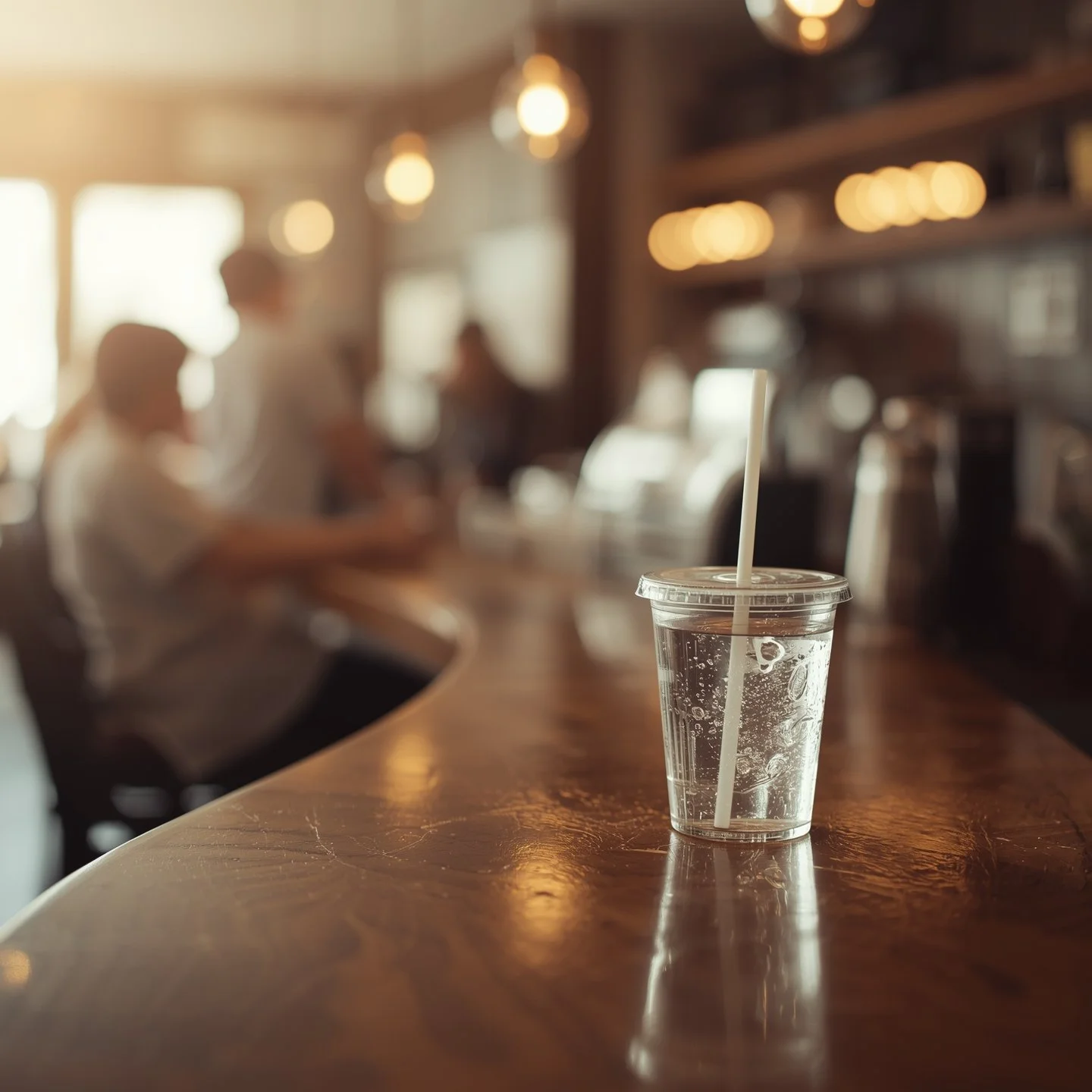
I flicked through the app, sent five bucks to the writer, and ordered a cup of water.
The cashier blinked. “Just water?”
“Hydration is underrated,” I said, which seemed funnier in my head.
While the espresso machine snarled at the next customer, I thought about the months when I survived on similar quiet messages. A ping of support here, a renewal there, each one just enough to tip the balance toward groceries instead of resignation. No banner. No parade. Just a stranger somewhere deciding that my words deserved a small piece of their paycheck.
Pride kept me from admitting how close I came to quitting. People think writers hoard metaphors, but mostly we hoard worries. We pretend we are fine so the readers will keep believing we are worth reading. Meanwhile a single subscription can mean butter or no butter, a working lightbulb over the desk or writing in the dark.
The espresso line shuffled. Foam sprayed. Receipts spat forth like tiny corporate confetti. In that moment I visited a different dimension, one where a poet in Pakistan writes something that lets somebody in Cleveland breathe again, where a photographer in Rio shows kids laughing in an alley and a lawyer in Berlin remembers why justice matters. No branding team could package that exchange. It jumps across borders, languages, rooftops. It costs almost nothing, yet it rescues someone every hour.
Five dollars can become steam inside a paper cup, or it can keep a voice alive. I had spent plenty on steam. Time to try the other thing.
Of course the cynics insist our choices are but stones in an ocean. They rattle off bullshit and statistics until we nod ourselves numb. They say we are swimmers in a rip current far too mighty to fight. I do not buy it. A current is only water moving in one direction. Enough of us choose another direction and the tide will change.
I took my cup of water, stepped aside, and messaged the writer. Your piece made this morning better. Keep going.
No answer yet. Maybe the writer is asleep, maybe working a second shift. Maybe debating whether stories still matter. When the notification arrives, it will not solve rent, but it might widen the margin between despair and the next paragraph. Widen it enough to finish a sentence that saves another stranger. The ripple keeps rippling.
Outside, the traffic sighed. I tasted chlorine and municipal minerals. It was not thrilling. It was better. It reminded me that what nourishes is not always sweet, that small decisions rarely trend yet can still change the future.
Tomorrow someone else will stand where I stood, thumb hovering over a menu full of habits. Maybe they will skip the latte, maybe they will not. I cannot run the numbers on how many minds must change before the machine notices, but I know the change begins here, in a line, with a phone, with a writer who chose honesty over sleep, and with a reader who for one moment remembered that money is just condensed attention.
I drained the cup, tossed it in the recycling bin that may or may not be real recycling, and walked on lighter than caffeine ever made me. Five bucks lighter, too, but that felt like the best kind of lightness, the kind that lets another person keep typing somewhere, believing their voice can cross the ocean and land in a stranger’s heart exactly when it is needed.
That is an economy worth standing in line for.
What is worth This Next Breath
What is worth this next breath?
I ask it before the sun climbs the blinds, before the coffee cools, before memory has the chance to rewrite anything into something kinder than it was. I ask it with the stubborn calm of someone who has counted change at gas stations and decided to keep going anyway. I ask it with a tongue that have tasted panic and dust and courtroom air. I ask it because I have learned that a question can keep a person upright when the ground feels like rumor.
What is worth this next breath?
I was taught early that life does not come everyday as a gift. It comes as a tally of moments that don’t forgive you if you flinch. I learned to tighten my laces and step forward when everything argued for sitting still. Bill collectors, offices, the foul air of humiliation. Friends who swore loyalty, then vanished. A door that slammed behind me with a finality I can still hear. I stood outside with a box full of the kind of objects a person collects when he thought he would never need to start over. I looked up at a sky too calm for what I felt and made an oath that no one would grade but me.
What is worth this next breath?
Stubbornness is the first answer. The kind that keeps your feet on the floor when everyone is already digging your grave. I could list mine. The week nothing worked and I still sent one message, then another, then a hundred more. The days I walked straight to the desk and didn’t quit until the day stopped fighting. The night I sat with grief until it stopped shouting and started to sing. The moment I chose water over something else and walked a circuit around the block, hands open, until the urge ran out of arguments. They are not trophies. They are reasons.
The reasons change. The vow remains. I am still here.
What is worth this next breath?
The choice itself. We speak of destiny as if it is an offramp. An arrival. I have met it as a series of small switches. Each one asks for a finger to flick it into life. Choice settles like a rock in my shoe. I have walked with that pain and kept going. That is my religion. That is my rebellion. I will keep choosing even when choosing feels like dragging a frozen net through black water. I am the animal that refuses to sink, the one who bites the line and pulls.
What is worth this next breath?
Odds. The ridiculous arithmetic of survival. The improbable victory a body manages just by standing up again. I have gambled against statistics and won by inches. I have celebrated a day in tiny flags planted on barren ground. Make the call. Send the draft. Clean the room. Take the walk. Feed the mind. Tell the truth to one person, even if that person is the myself, in the mirror. Celebrate like a fool for five seconds, then ask the question again and keep moving.
What is worth this next breath?
The work. Mine. The stubborn, unglamorous craft of making meaning without sponsorship. I write like a man hauling a rope. I search for one line that feels carved from something alive, then I fight for a second. I do it in the face of the world’s laughter and the algorithm’s indifference. I do it when a sentence flies, and I do it when a sentence limps. I do it because language is a set of keys I keep in my pocket, and I refuse to let the lock win. I do it because the day needs fire, and I have flint.
What is worth this next breath?
The people. The few who stayed. The child who once leaned into my side at a stoplight and asked if the world was a scary as I acted. The neighbor who slid a casserole across the threshold without eye contact because kindness can be a little shy. The stranger who wrote three words that kept me from falling through into hell. The old friend who called when he did not have the right words and gave me the sound of another life breathing on the line. I do not believe in guardian anything, but I believe in hands. I have felt them catch me.
What is worth this next breath?
The body, flawed and miraculous. The drum in the chest that refuses stillness, the rhythm that pushes blood toward possibility. I have cursed this vessel for its limits and then forgiven it for its stubborn courage. I have watched it heal from what should have killed it. These lungs have filled with smoke and laughter and hospital air, and they still rise like two old workers showing up for another shift. I owe them gratitude. I pay in oxygen and discipline.
What is worth this next breath?
The past, because it can be repurposed. I raid my own history for lumber. I build bridges from the boards of failed attempts. I lay floors from the planks of abandonment. I nail together a table from the scraps of my mistakes and invite the future to sit. If the room echoes, I speak louder. If the walls feel thin, I sing until they thicken. The past is dead. I use it for parts.
What is worth this next breath?
The anger that refuses cruelty. The flintlike insistence that life has value independent of profit. The vow to protect the small things that keep a soul aligned. Morning walks. Honest sweat. Good food. A story that tells the truth without turning it into theater. The relief of speaking shame and watching it lose power. The discovery that simplicity is not surrender, it is steel.
What is worth this next breath?
The future, unpromised, unscripted, untamed. I want to live long enough to watch something grow that once only existed as a sketch in a notebook. I want to witness the day when a person I love believes in themselves more than they believe in gravity. I want to laugh at jokes we haven’t written yet. I want to carry boxes for someone moving into their first place. I want to sit at a table where nobody has to earn the right to be there. I want to show up when showing up is the whole point.
What is worth this next breath?
The fight with despair. I respect it as an opponent because it knows my softness and my quiet retreats. It waits for a storm. It whispers about relief. I answer by pouring a glass of water and calling a friend. I answer by stepping into rain and letting it bathe my face. I answer by touching a book that once saved me and remembering I did not invent courage, I joined a line of people who practiced it. I answer by working until the whisper grows bored and leaves me alone.
What is worth this next breath?
Faith without theater. Faith as a verb, as calloused hands, as a idea scrawled on a scrap of paper. Faith that the long path rewards tenderness and grit. Faith that there is a hidden light in everything, even if you have to mine through a mountain to find it. Faith that today is a blade that can cut bondage and carve a channel for water. Faith that this moment can become special if I place it upon a throne.
What is worth this next breath?
The yes I owe myself. The one no sermon can deliver. The yes that sounds like a door opening inside. The yes that tastes like victory. The yes that refuses to wait for blessing. I say yes to the work, yes to the day, yes to the scar, yes to the person I am building with sweat and sentences. I say yes to the quiet. I say yes to the thunder. I say yes to the truth that this life will not hand me a script, and I do not need one.
What is worth this next breath?
This. The act of choosing again. The audacity of not disappearing. The promise I make without witnesses, then keep in full view. The knowledge that someone somewhere is asking the same question with their back against a wall. If you can hear me, I am speaking to you. If you cannot hear me, I am still speaking to you. Stand. Let the lungs rise. Let the hands find something worth lifting. Let your feet learn a new path. Call forward the person you always suspected you could become.
I do not ask for ease. I ask for clarity. I ask for the chance to stay honest in a world that rewards theater. I ask for the strength to become exactly what I keep promising when nobody is looking. I ask for the stamina to love righteously. I ask for the courage to forgive without losing self-respect. I ask for the kind of patience that plants trees whose shade I may never sit under, and the urgent joy that dances in that fact.
So I ask one more time, as a drumbeat, a summons, a vow I renew with open eyes.
What is worth this next breath?
Everything I am still willing to build. Everything I refuse to abandon. Everyone who ever reached for me when I had nothing to offer back. The vision that keeps pacing the room, waiting for me to stop doubting and begin. The road that will teach me by scraping my knees and filling my pockets. The love I will give without measuring return. The work that will outlive me if I do it right. The simple miracle of standing up when lying down would be easier.
What is worth this next breath?
I am.
And I intend to spend it.
Raspberry Glow At Huron
It all begins with an idea.
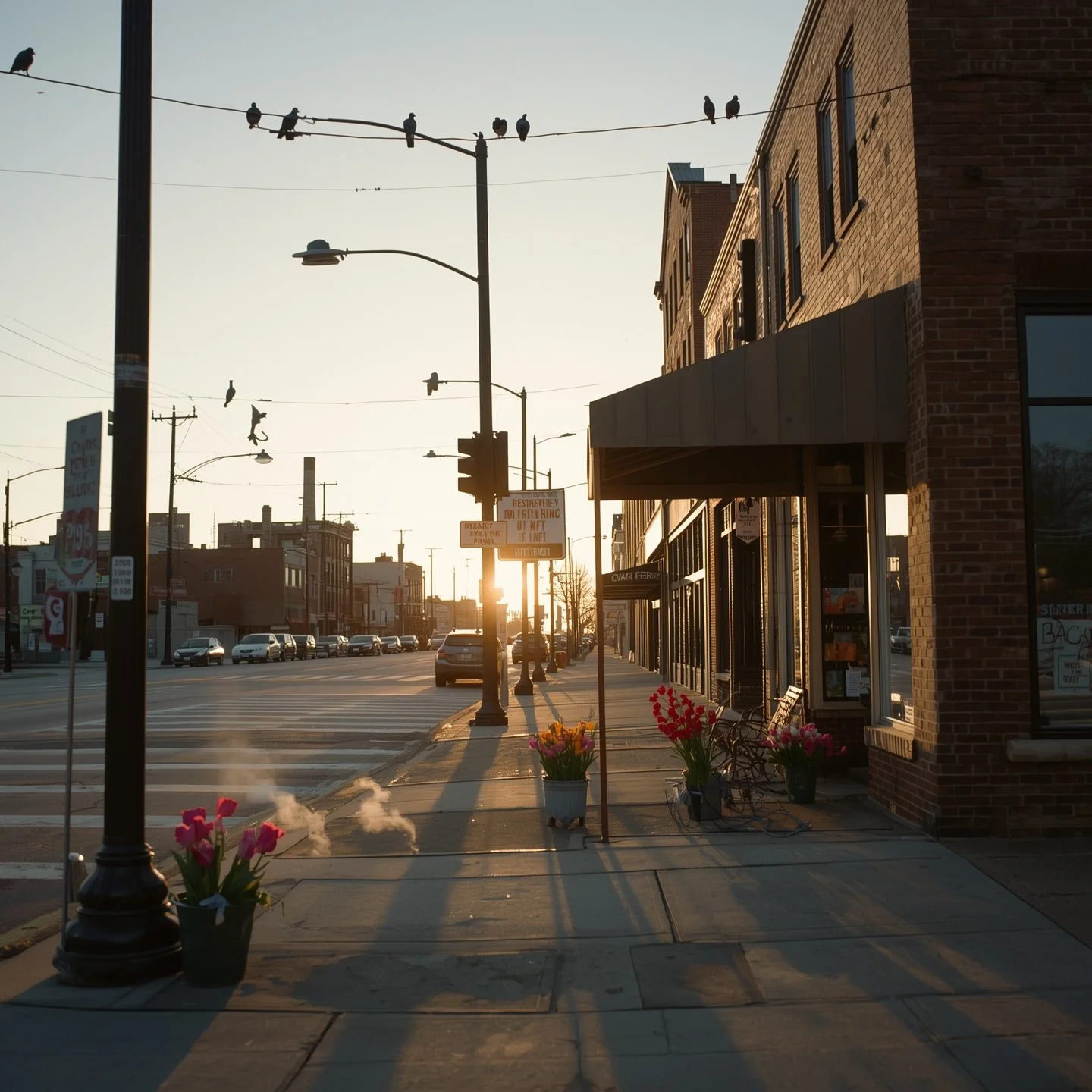
Before Waukegan even blinked awake, Clark Street lay under a sky the color of thin lime rind. Street-lamps clicked on, halos mild and even, except for the bulb above Huron. That one slipped from red into an impossible raspberry. Cars waiting there, drivers half alive and coffee starved, tasted fruit on the air and wondered if they had imagined it. Two sparrows on the cross-arm chirped back and forth as if they had painted the bulb themselves.
Pigeons lifted off the market awning, circled once, then lined a wire so their shadows became music staves across the pavement. A boy in grass-stained shorts, late for day camp, stepped into those shadows and felt the day’s invitation. He trotted on, bare knees ready for whatever pavement might teach.
Inside the bakery, the baker decided the first loaf would tune the whole city. She rinsed her hands in scented water, whispered the one-line blessing her grandmother used, and kneaded until the bowl sighed. When the dough slid into the oven, sweet steam climbed the chimney and coaxed a row of clouds to hover as if tied by invisible string.
The steam drifted down an alley where two rabbits nibbled beard-grass that poked through asphalt. They touched their noses to the ground and soon a ring of fresh clover surfaced. A clerk hauling trash paused, mouth open, let the bag rest by the dumpster, and promised himself a garden before summer ended.
At Lawrence, a bus sighed and opened its doors. The driver caught the distant raspberry glow and breathed slower. Empty seats waited for an elderly muralist racing to finish a wall of seagulls, a janitor who practiced salsa with a mop, and a college student recording insect hymns on her phone. The driver lingered at the curb, giving the light more time to shine.
Outside the florist, buckets rolled onto warm concrete. The florist believed colors carried sentences. Today he set tulips beside gladiolus so the block could talk about forgiveness. A woman with shoulders heavy from a week of bad news stopped when violet irises flashed raspberry back at her. She tucked one behind her ear, laughed at her reflection, and headed toward the lake feeling lighter than before.
Under the Blue Line, bolts long rusted found a faint shine. The bakery’s steam mixed with engine oil and graffiti dust. A mechanic on break touched one bolt, felt it quiver like a tiny heart, and decided to call the brother he had ignored for years.
Behind Graceland Cemetery, sunrise set angel statues ablaze with marigold light. Mariano swept sand from stone paths and steered his push-brush so the cinnamon-rich aroma from the bakery drifted among the graves. A crow landed, dropped a soda-can tab at his feet, then lifted away. Mariano tucked the silver ring into his pocket, certain it meant good luck.
By midday, word fluttered along Foster that street-lamps tasted like fruit. An elderly tailor threaded apricot-colored silk into one lapel, then another sleeve. No one objected.
On the pier, Lake Michigan flashed steel-bright. Perch leapt straight into coolers as if they had heard a grandmother wish for supper. Fishermen filleted their luck on benches and handed wrapped portions to anyone willing to smile.
Mail carriers slipped pale envelopes through brass slots. Each flap wore a raspberry heart. Inside, a single instruction waited: Believe, and watch. Some notes stuck to refrigerators. Others vanished behind junk mail. A few nestled inside half-read novels. Wherever they were opened, neighbors later spoke of vanilla drifting through stairwells.
Evening came softly. Lamps returned to their usual amber and green, though now and then a shy raspberry blink greeted late walkers. Rabbits returned to their clover ring, pigeons lined their wire, and the underpass bolts still glowed faintly.
The baker set cooling loaves on the sill, certain tomorrow’s batch would rise higher. Clouds puffed as if agreeing. Her lullaby of cinnamon and fenugreek slipped through an open window where a woman once fell asleep to the television; tonight she listened to the world instead.
Clark Street listened too. Machinery sang in lower keys, unpaid bills waited without scolding, and forgotten recipes migrated from memory to stovetop. That evening, a cab driver at Devon stopped, clapped once for the sinking sun, and drove on smiling. A child tucked the raspberry letter under her pillow and decided to dream in colors before unimagined.
Before dawn, clouds gathered above the bakery for their share of fresh steam. Rabbits drowsed next to clover. On Argyle the stoplight rehearsed its fruit-bright glow for commuters still dreaming. Somewhere in that gentle murmur of engines, two sparrows prepared another whispered wager, confident that belief alone could tint the day ripe enough to taste.
Every Poisoned Well
It all begins with an idea.
There is nothing in the world that is not altered by the eye that beholds it. Even sorrow blushes beneath a gaze that does not flinch.
I haven't been able to find my voice lately. For the first time in a while, I didn't even care to write. I wrote this one for me, not to inspire, not to wrap it in silk and call it grace. I want to speak to the writers. To the ones who still leave comments. To the readers who still cry. To the ones who get up and try again, quietly, with no applause and no finish line. I want you to hear this. Not because you need saving, but because you are the saving.
The world hardened me.
It does that. It teaches you the cost of tenderness early and often. It teaches that vulnerability is weakness, generosity naïve, and hope a luxury for the blind. It sharpens its teeth on the softest parts of you. And if you’re not careful, you learn to flinch before you’ve even been struck.
But then, somehow, despite it all, there are those who still choose to look gently at the world. Who still speak. Still write. Still reach.
Each morning I open my eyes and scroll through a hundred tiny acts of defiance. A single mother writes about making it through another night with nothing but beans and a promise. A man with cancer writes about the way the sun hit the faucet while he brushed his teeth and how, for a second, it felt like a miracle. A girl who was hurt in a way no girl should ever be hurt writes three sentences that hold more life than most people live in a decade.
They do not just ask to be seen. They see. And that is everything.
We have made a world of distraction and sales pitches and performed agony, but every once in a while, someone writes something that shatters the noise. Not because it’s loud, but because it’s true. You read them and forget to breathe. They do not ask for agreement. They do not wrap their pain in pretty packages. They simply stand there, open. Alive.
Unapologetically awake.
That's what I aspire to. To stand in the middle of shit and say it's shit. To say it sucks. To not dress it up in some pretty message or plan or good suit. Because the lesson isn't that every cloud has a silver lining. It's that sometimes the storm destroys everything you built and there is no reason, no growth, no hidden gift wrapped in the wreckage. It's that we've been trained to smile through our own breaking, to find meaning in the graves of those gone, to call our trauma a teacher. But maybe real courage is looking at senseless loss and refusing to make it make sense. Maybe it's saying someone died and it wasn't part of some plan, my marriage ended and I didn't need to learn anything from it, my body failed me and there's no wisdom in the betrayal. Maybe it's understanding that some pain just exists, angry and purposeless and hungry, and our job isn't to feed it meaning but to survive it. The saving grace isn't in finding the lesson. It's in the brutal honesty of admitting that sometimes there isn't one, and loving ourselves enough to stop looking.
And on the days, days like today, I wanted to disappear into nothing, I read them. On the days I forgot my own worth, someone left a comment under a post and didn’t know they were speaking directly to the part of me that was still on fire. Sometimes it was just a line. Sometimes a whole story. But the point is, they wrote back. They sang when they had no breath left. They reached when they had no reason to believe anyone would reach back.
I have tried to do the same.
Not with perfection. Not always with grace. But with a kind of trembling ferocity. Because I believe, still, that there is more beauty in this world than we are told. That we are not here to win or conquer or perform. That some mornings, the highest form of resistance is just putting two words together that do not lie. That say, I see. That say, still here. That say, yes.
This is for the ones who sang while the world was flooding. Who refused to stop dancing just because the room caught fire. Who held up a single note like a torch while the rest of the world called it foolish. You have saved more lives than you know. You have saved mine. And that is no exaggeration.
So I am telling you now, whoever you are, wherever you sit reading this with your weary heart or your clenched jaw, your unfinished sentence or your overdrawn account, I am telling you. You are the song. You are the poem. You are the art. You are the miracle. You are the heart that proves we haven’t gone numb. You are what we make of this wreckage. You are what’s left that still dares to be beautiful.
I say this not for inspiration. This is a record. This is documentation of the unkillable, unbearable beauty that refuses to die, even here, even now, even beneath algorithms and wars and silence.
There are no saints in this. No legends. No chosen ones. Just people who get back up. Just people who post something honest and walk away. Just people who have been betrayed by almost everything except each other.
If there is a chance for us, it is because of you. The ones who still write. The ones who still sing. The ones who do not look away.
You altered the world by the way you beheld it.
And every sorrow, every broken heart, every poisoned well, blushed.
And then, slowly, began to change.
The Beautiful Vandals
It all begins with an idea.
Every sentence is a declaration of war against the silence that owns everything.
The universe is a tyrant of quiet. Fourteen billion years of perfect, suffocating silence. Stars explode in mute agony. Black holes devour light without screaming. Galaxies collide in soundless apocalypse. Even here, on this chattering speck of dust we call home, most existence happens in brutal quiet: bones break, flowers bloom, children are born and die, all without a single word of explanation or protest.
Then you pick up your pen like a weapon and decide to burn it all down with language.
Writing is not just theft. It is desecration. It is grave robbery on a universal scale. You take the holy, untouchable moment, the raw scream of existence itself, and you violate it with words. You drag the infinite through the meat grinder of grammar and serve up the bloody remains as truth. You are a butcher of beauty, a vandal in the cathedral of reality.
And it is the most magnificent crime ever conceived.
We write because consciousness is not a gift but a wound that will not heal. The universe stabbed us with awareness and left us bleeding meaning all over everything. So we write in our own blood. We write because we are dying and we know it and we refuse to die quietly like everything else in this screaming silence.
And the unpaid writer, we are the most glorious in our madness. Saints of futility, martyrs to meaninglessness. We bleed their lives onto pages maybe no one will read, sacrifice everything for sentences that will crumble to dust while the mountains they tried to describe stand unmoved. We are beautiful fools jousting with infinity, and we lose every single battle, and we keep charging anyway because surrender is death.
Writers are the universe's greatest rebels, the only beings with the audacity to look at existence and spit in its face. They see perfection and immediately want to rewrite it. They witness miracles and think, I can do better. They are cosmic vandals spray-painting graffiti on the walls of eternity.
We write because we burn. Because consciousness is fire and flesh cannot contain it. We write to keep from combusting, to bleed off the pressure of knowing too much, feeling too much, being too much for these fragile bodies to hold. Every word is a small explosion, every sentence a controlled detonation of the soul.
Every story is a scream disguised as a whisper. Every poem is a knife thrown at the heart of nothingness. Every paragraph is a middle finger raised at mortality. We know we cannot win. The universe will erase every word, every thought, every trace that we existed. But we write anyway because the alternative is to accept that we are nothing more than walking meat having delusions of significance.
The blank page mocks us with its emptiness. It knows we will fill it with our desperate scratches, our pathetic attempts to matter. It waits like a predator, patient and hungry, ready to devour our meaning and shit out silence.
But we write anyway. We write with fury. We write with love. We write with the desperate passion of the condemned. Because right now, in this burning instant, we have words. We have the power to transform void into voice, nothing into everything, death into defiance.
It will not last. We will not last. The sun will die, the universe will freeze, and every word ever written will dissolve into quantum foam.
But right now we burn with language. Right now we are gods creating worlds with nothing but ink and rage. Right now we are the universe's greatest miracle. Matter that dreams, dust that dares, silence that found its voice and refuses to shut up.
It won't last. Nothing does. The heat death of the universe will erase every word ever written. But for as long as we can hold a pen, we are the universe arguing with itself about whether it deserves to exist.
And sometimes, between one word and the next, we win the argument